The Art Deco style flourished in Britain during the 1920s and 1930s. London became the heartland of this elegant and modern style, and in the metropolis today you can still see this interwar heritage in its buildings. Many of these buildings have become some of London’s favourite landmarks. In ‘Art Deco London’, photographer Franco Pfaller has recorded the huge variety of Art Deco buildings still to be seen throughout London. Look through these photographs and you will quickly see the appeal of this stylish era of the 1920s and 1930s in the metropolis.
Lachlan’s Review
There have been numerous books over the years about Art Deco buildings in London. There have been significant changes in the cityscape impacting these buildings in recent years. Some changes such as renovation, restoration and repurposing of long-vacant buildings are welcomed by Londoners, especially those who appreciate the Art Deco era and cherish what remains today. Other changes, including physical deterioration, long vacancies, abandonment and some unsympathetic repurposing are not so positive. The arrival of this new book, offering a fresh look at the Art Deco buildings of London is therefore welcomed.
As someone who lives in London and enjoys Art Deco architecture, it is a book that provides inspiration to go out, take advantage of London’s public transportation to visit the building photographed in this book. To see the well known ones, perhaps with tasteful restorations and to visit new ones; less well known, but nevertheless attractive, exuding the charm and design of the Art Deco period a hundred years ago.
The book provides photographs of well over a hundred buildings. Some such as Battersea Power Station and the Hoover Building are well known. Others, such as Tube Stations and my local Richmond Station are known of course, but perhaps less appreciated as distinct examples of Art Deco architecture. Then there are other more obscure buildings, places no longer used for their original purpose; some once repurposed as Bingo Halls now fringe Churches or vacant. Nevertheless they are of interest and provide fine examples of distinctive architecture worth seeing and perhaps worth saving.
The author provides a brief description of each building. Basic information such as the year of construction, architect, initial owner, changing purposes over the years, key decorative features and building materials. The author adds an interesting anecdote or comment to each. Sometimes dryly humorous, sometimes social or cultural commentary, always interesting. One is a warm, personal reflection of his connection with a building I know well from the upper level of the 337 bus.
The photographs are mostly architectural, full-page compositions and display the public-facing view as seen from the street. Occasionally there are smaller photographs of particularly interesting features, external and also internal. The author has taken care visiting these buildings and photographing at certain times of the day. There is a welcomed absence of people and road transportation in many of the photographs. This may be due to photographing around dawn when a mix of natural light and artificial building light provides a particularly pleasing image, accentuating some of the charming features that are less obvious in bright daylight. I enjoyed seeing my local Richmond Station at 5.10 in the morning (if the station clock is correct !) with not a person, bus, taxi or pedestrian in sight. One particular image of the Charlton Lido is also quite memorable. Empty of swimmers, the buildings and pool illuminated by natural and artificial lighting and a wonderful reflection.
The book includes a list of the buildings photographed and a map of London showing the location of each. ‘Art Deco London’ will be enjoyed by anyone interested in Art Deco architecture. It is not a book intended to be an in-depth, academic reference. It is a contemporary, fresh look at Art Deco buildings; presented via photography and minimal text. Text that is warm, inclusive and engaging. For anyone living in London, this book will provide incentive to visit both lesser-known and well-known examples of Art Deco architecture. To renew acquaintances with some buildings that may be enjoying a new life in this ever-changing city. For visitors to London ‘Art Deco London’ is an ideal travelling companion, providing fresh photographs, basic information and helpful location details.
The author notes in the Introduction that the photographs are mainly exterior shots and suggests another book on London Art Deco interiors is a possibility. I think that is a great idea. This is one of those book, while satisfying, may leave the reader wanting more. Personally, I have an interest in bas-reliefs and other decorative features often found on Art Deco buildings. These as well as signage, lettering and fonts from the Art Deco period could also feature in a future book. I wish the author and publishers great success with this fine book and look forward to more publications on Art Deco and other design aspects of London buildings.
Renting out your holiday home? Good luck. Things will break, and items will go missing. Changeover day—usually Saturday—is a whirlwind for property managers, who rush from one place to another. Do they have time for a thorough inventory check? Of course not. They’ll only notice the most obvious damage. And even if they do, will they deduct the cost from the guest’s deposit and risk a bad review on Airbnb or Booking.com? Unlikely. By the end of the year, you’ll be the one covering the cost of missing or damaged items. That’s where my affordable art comes in.
If you rent out your place, don’t leave anything behind that you truly value. Check out my Real Fake Vintage Posters—stylish, eye-catching, and perfect for rental homes.
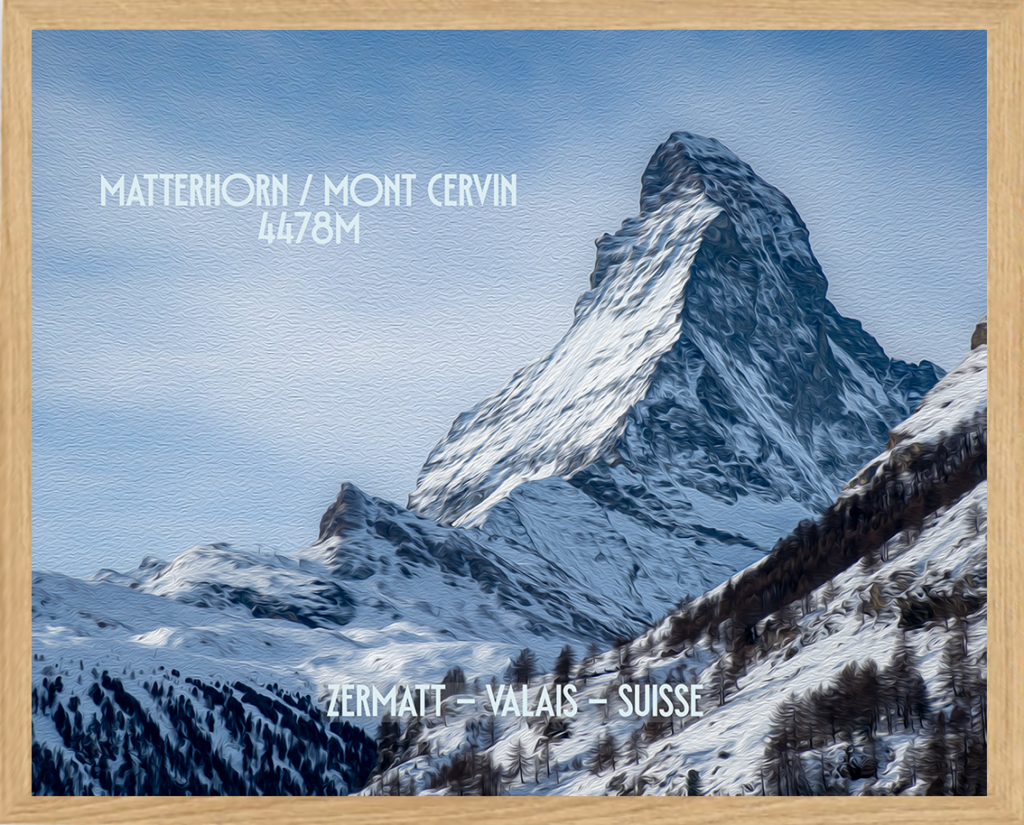
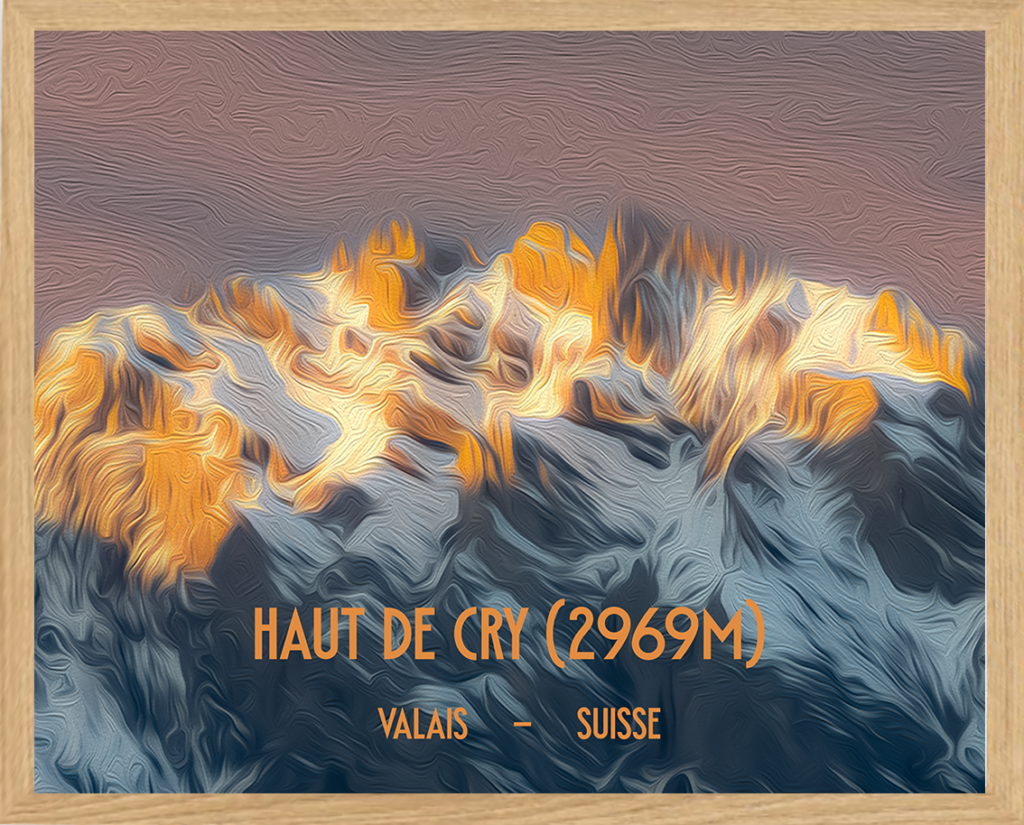
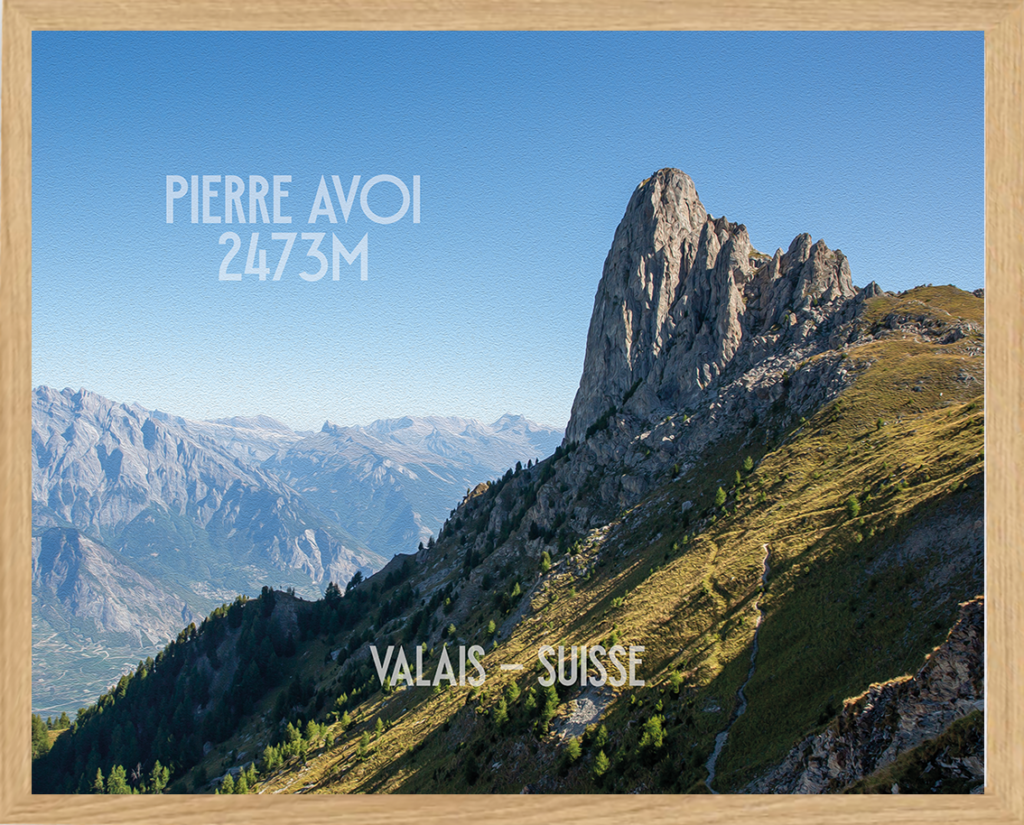
Now, I’m excited to introduce a brand-new series of six affordable art works. Each piece measures 50cm x 40cm, making it easy to find frames. These works, inspired by my own photography, have been transformed with an oil painting effect, blending nostalgia with a contemporary twist. Instead of a print of a Cezanne or J.W.Turner, get an original Pfaller!
I’ll be showcasing them at the Arts & Crafts Market in La Tzoumaz this July, and they’re available framed or unframed. Soon they will be added here too.
Here, for the first time, are my six new artworks.
Poster Mont Gele and Mont Rogneux with an oil painting effectPoster Matterhorn/Cervin with an oil painting effectPoster Haut de Cry with an oil painting effectPoster Pierre Avoi with an oil painting effectPoster The Aiguilles du Tour and the Verbier cable cars with an oil painting effectPoster Les Dents du Midi
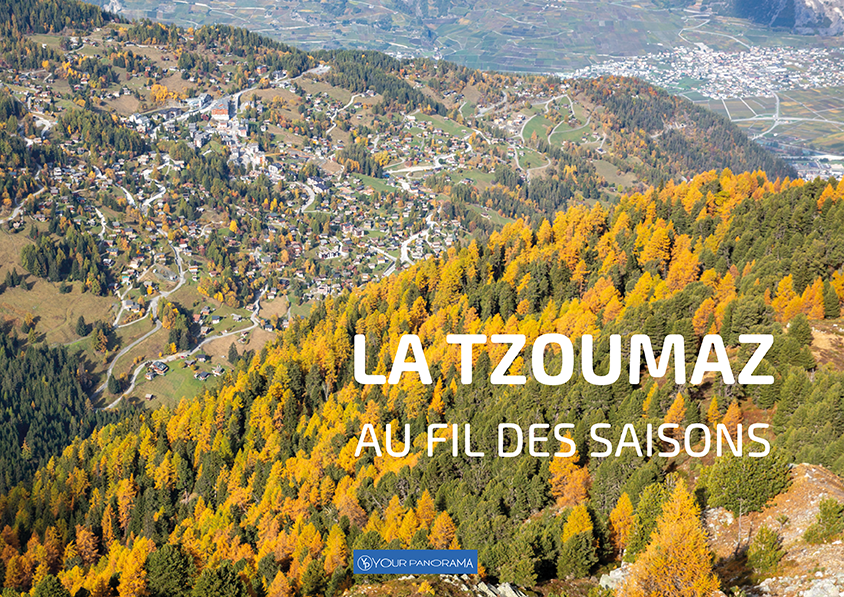
Nestled in the heart of the Swiss Alps, La Tzoumaz is a place of breathtaking landscapes, ever-changing with the rhythm of the seasons. The forthcoming book La Tzoumaz – au fil des saisons is a visual journey through this enchanting region, offering a glimpse into its stunning natural beauty, from the crisp winter snowscapes to the lush greens of summer.
The book is a deeply personal project, born from a lifelong dream of owning a chalet in the mountains. In 2004, we found the perfect wooden chalet, built in 1965. At the time, La Tzoumaz was still officially called Mayens-de-Riddes, but the marketing campaign for the name change was already well underway. Today, in 2025, it has already been 20 years since the official name change took place.
Unlike a traditional travel guide, La Tzoumaz not focus on text-heavy descriptions. Instead, it allows the photographs to speak for themselves, capturing iconic landmarks such as La Pierre Avoi, the Vallon d’Arbi, and the towering peak of Haut de Cry across the Rhône Valley. The magnificent silhouettes of Grand Combin and Mont-Blanc also make an appearance, offering a stunning backdrop to this alpine paradise.
If you follow my Instagram or that of the La Tzoumaz tourist office, or if you have purchased my calendars, postcards, or photos, some of the images may seem familiar to you. But in book form, the photos will certainly bring even more enjoyment..
Whether you are a long-time visitor of La Tzoumaz or discovering it for the first time, La Tzoumaz is sure to inspire a deeper connection to this picturesque alpine destination. Stay tuned for its release and prepare to embark on a stunning visual journey through one of Switzerland’s most beautiful regions. The book will be available in my online shop.
The Format of the book is A4, it comes has a paperback and has 132 pages. ISBN 978-1-0369-1034-1
In March, I was approached by the tourist office of Leukerbad, a spa resort (and much more) in the canton of Valais. They were developing a new “adventure trail” featuring various interactive stations, one of which required a labelled panorama (beschriftetes Panoramabild). While the design of the interactive elements was in place, they still needed the photo and labelling for the panorama.
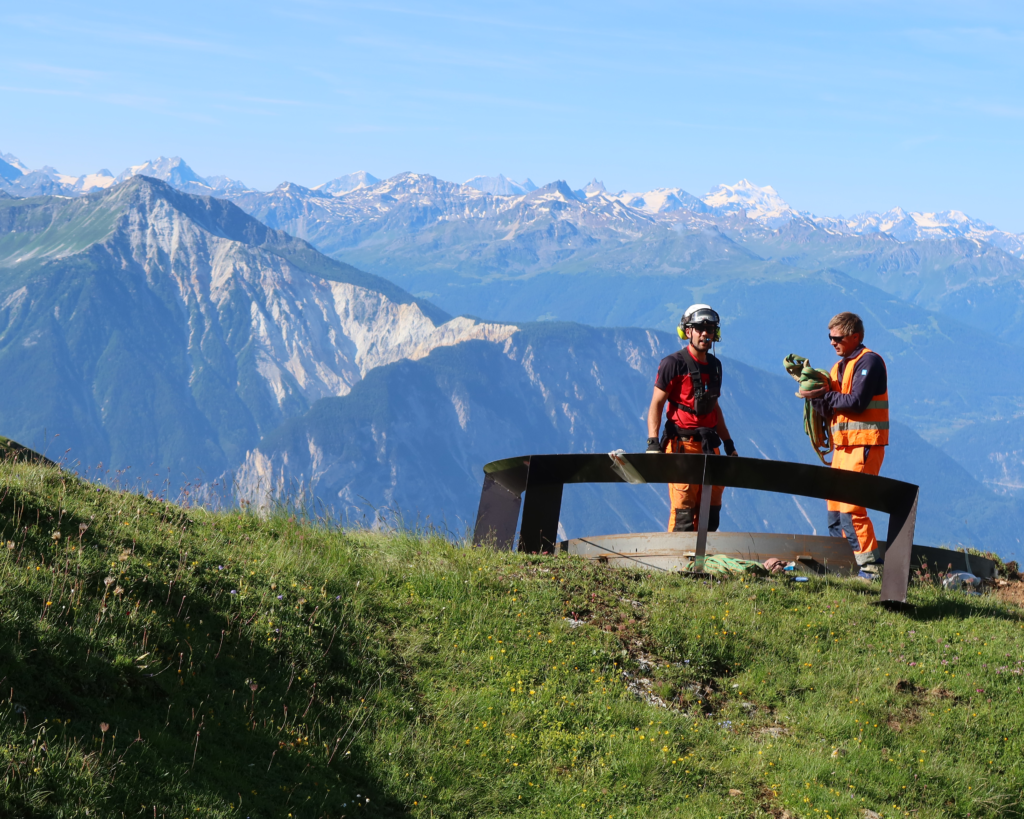
In July, Lucia Toth from Leukerbad Tourism guided me from the top of the Leukerbad-Rinderhütte cable car to the exact location where the panorama would be displayed, and where I was to capture the photograph.
The view was stunning, though not particularly clear that day. From this vantage point, one can see the Matterhorn, the Grand Combin, and Mont Blanc, among other peaks stretching along the Rhône Valley. However, the hazy conditions limited my ability to capture a clear shot, and I could only take a few test photos while some curious locals looked on.
The locals watched on…
I also suffered what can only be described as a sheep attack, an experience I’m still mentally recovering from. Click on below link for a disturbing recording… not for the faint hearted.
About a week later, I returned to take the final panorama. When I arrived, construction was underway on the platform that would hold the panorama, with the table and other structures being flown in that day. With the project progressing rapidly, I felt the pressure to deliver the photo and the labelled panorama (beschriftetes Panoramabild) soon.
Das Fundament fürs Panorama Bild in LeukerbadDer Panoramatisch ist angekommen
Capturing the image presented some technical challenges. Typically, my panoramas include some foreground elements, but given the specified format, I had to focus solely on the peaks—some of which were over 80 km away in the Mont Blanc Massif. I used a zoom lens and stitched together around 40 photos to create a long and narrow panorama.
Ein kleiner Ausschnitt des Panoramas von Leukerbad
Now that the adventure trail is complete, I had to visit and see the installed panorama for myself. Despite the cloudy weather on my visit, the trail was busy, and I was pleased to hear that many families with young children were enjoying it.
Bei diesem Wetter braucht man ein beschriftetes Panorama
When I founded YourPanorama over a decade ago, my vision was to create affordable, customised labelled panoramas. Splitting my time between London and Switzerland, I always intended to capture the unique landscapes of both countries.
In London, I focused on cityscapes, labeling key buildings, sightseeing spots, and other points of interest. Meanwhile, in Switzerland, I primarily highlighted the peaks and villages visible from various vantage points.
The mountain panoramas have proven to be quite popular, and I’ve been fortunate to create a number of them, not only in Switzerland but also in France and even as far away as Japan.
The panoramas of London, however, were more challenging to gain traction. Early works, such as the Panorama of the Putney Riversideand the View Near Hammersmith Bridge, attracted some admirers, but those featuring the City or Canary Wharf were less well-received.
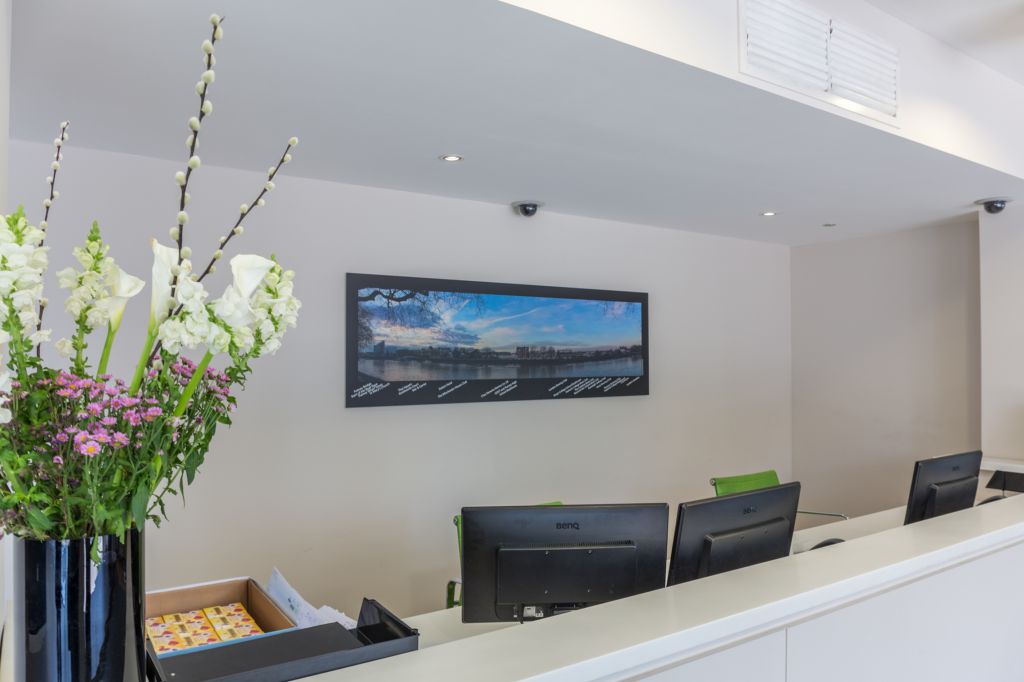
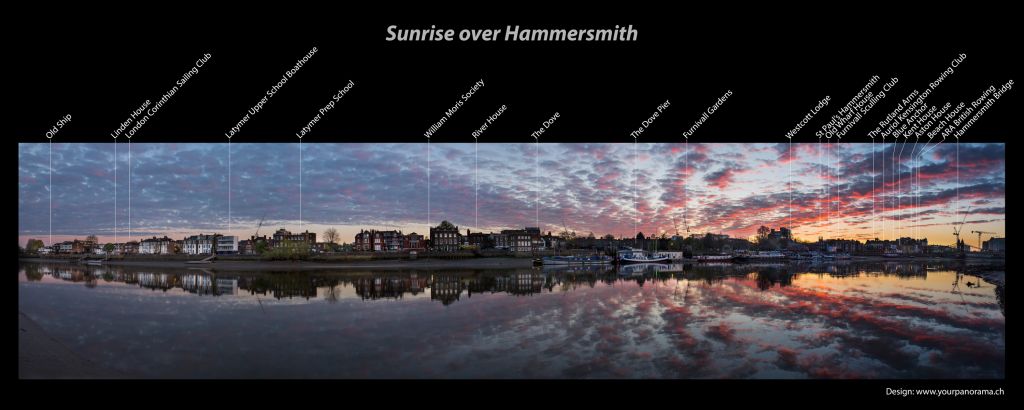
Panorama from Putney, installed in an office receptionLabelled Panorama of Hammersmith Riverside
For several years, I paused creating London panoramas. The ever-changing skyline, with new skyscrapers constantly rising and views dominated by cranes, made it difficult to create something enduring.
Now, the landscape has evolved. While construction continues, the city’s skyline feels more settled. This newfound stability, along with recent customer interest in labelled cityscapes, has inspired me to revisit London panoramas.
The Millennium Bridge Panorama – Photo
Unlike the Swiss panoramas, which were mostly printed in full color, I believe the London panoramas might work beautifully as sketches, offering a fresh, artistic take on the city’s dynamic skyline.
Sketch of the Millennium Bridge PanoramaBlack Millennium Bridge Panorama
If you have a view of the city—whether from your home or workplace—you might want to consider getting in touch. Let’s work together to create a personalised, labelled panorama that captures your unique perspective of London.
As a side note, if you’re a fan of London, especially its iconic river, you might enjoy my photo book, London’s Riverside in Photographs, published by Amberley Publishing. It offers a captivating visual journey along the Thames, highlighting the beauty and history of the city’s riverside landmarks. Find it here.
Front page to book ‘London’s Riverside in Photographs’
Below the text to accompany the photos as I had it in my ‘original’ book version, which was supposed to be a coffee table book. I could not find a publisher that was ready to finance a coffee table book but am grateful to Amberley Publishing for publishing a version of the book London’s Riverside in Photographs in paperback (photos only). Find the book on Amberley’s Website hereand of of course, in my shop here. As a side note – you might find other interesting products in the shop or on mywebsite.
A few caveats… originally I had the book going from the Thames Barrier upstream (thus the other way from the final print). I did change the order below to be in line with the printed version and adapted the text a bit… it hopefully will make sense. Some of the text was/is a bit out of date by now (I delivered the book in 2022 for it to be published by 2024). Some text I updated, some I added and some I just left as it was. But… I did add a few photos that did not make it into the book.
This text was also not proofread, I take no responsibility for it’s accuracy and the views in it are mine only (and not always entirely serious).
Hampton Court Bridge
The most upstream of all Greater London Bridges, it is the fourth bridge built on this location. Opened on July 3, 1933 by the Prince of Wales (future King Edward). He was busy on that day, opening also the Chiswick and the Twickenham bridges. See the a charming YouTube clip about him here.
Hampton Court Palace
Books have been written about Hampton Court Palace, but a short version is that works started in 1514 during the time of King Henry VIIth, King William III destroyed much of the Tudor work to make it more look like the Palace of Versailles (but never finished the work) and now it’s open to the public and definitely worth a visit (500 years in a nutshell).
Kingston Railway Bridge
The current bridge was built in 1907 and replaced a cast-iron bridge that only lasted 44 years. The bridge enables what is called the Kingston loop… a train journey that starts and ends in Waterloo. When, like me, you are not a fan of big crowds in trains, I tend to go to a game at Twickenham from London the ‘long way’ round.
Kingston Bridge
For centuries, the predecessors of the current bridge were the only Thames bridges between London Bridge and Staines Bridge (in Surrey). Kingston Bridge was opened in 1829 by the Duchess of Clarence (future Queen Adelaide) and has been widened on two occasions since.
Teddington Lock and Weir
When you walk on the Thames path from Richmond towards Kingston upon Thames, you pass the Teddington Lock and Weir. There is a possibility to cross the river on the two Teddington Footbridges, with a small island to separate them.
The Teddington lock was built in 1810 and marks the end of the tidal Thames. It is a combination of a weir and 3 locks. During WWII 100 a flotilla of ‘little boats’ assembled there which were used for the evacuation of the trapped soldiers in Dunkirk.
In 2015 the Teddington and Ham Hydro Project (formed by a group of Ham residents) received planning permission to build 3 hydropower turbines to create clean energy for the local community. This permission was overturned in 2018 in court after a local private club that is located in the proximity of the lock objected. Is it relevant to mention that the club is owned by Oil giant Shell? I don’t know the details, but there is a story there, right?
Richmond Bridge
Richmond Bridge was built between 1774 and 1777, had some small modifications in the late 1930s, and is now the oldest surviving Thames bridge in Greater London.
The way the Thames meanders can be easily proven in Richmond. If you walk from, say Barnes to Richmond on the south of the River and you arrive in Richmond, you clearly are still south of the river since you never crossed it. Or are you? Geographically speaking, you are now actually north of the river.
Richmond (often, mistakenly, called Richmond upon Thames, which is the borough) is a great spot to either finish or start a walk. Downstream, upstream, or towards Richmond Park, the possibilities are many and Richmond itself has a certain English charm, especially along the river bank.
Twickenham Bridge
Like Chiswick Bridge, Twickenham Bridge is a relatively new river crossing, opened by Edward, Prince of Wales (who became King Edward VIII until his abdication) on July 3rd, 1933.
Edward was busy that day (as previously mentioned), he opened in all three bridges (also Chiswick and further upstream the 4th Hampton Court Bridge). Here the evidence of ‘one of the most remarkable of many public ceremonies he performed’ again. YouTube Clip.
Richmond Railway Bridge
Next to Twickenham Bridge is the older Richmond Railway Bridge. The current one, opened in 1908, is the second on this location. The first one was built in 1846. From there you can follow the promenade to Richmond.
Richmond Lock and Footbridge
Walking the south side of the Thames path from Kew Bridge towards the Richmond Lock and Footbridge is a beautiful, 5.6km long, stretch of the river. The walk leads along Kew Gardens and one gets a good view of the Syon House on the other side.
Most of the walk is covered by trees and thus ideal for that hot sunny day they call summer (just kidding, the weather in England is not as bad as its reputation).
The Richmond Lock and Footbridge was opened in 1894. It was built to make sure that there was enough navigable depth in the water upstream.
Kew Railway Bridge
On the Kew Railway Bridge circulate both Overground and Underground trains. The bridge was opened in 1869.
I like this bridge a lot, it offers some nice sights, especially with the rowers and Oliver’s Island, an ait that is located between Kew Railway Bridge and Kew Bridge. And no, until I wrote this, I didn’t know that an ‘ait’ is a small island in a river… and I also learned that a small island is an islet (I do love the English language).
Kew Bridge
The current Kew Bridge is the third one on this location and was inaugurated in 1903. The first bridge was inaugurated in 1759, which made it the 4th river crossing after London Bridge, Putney Bridge and Westminster Bridge.
Kew Bridge links the South Circular and the North Circular Roads and hence can get quite congested. But you won’t notice any of the stress above you while you stroll along the Thames path.
Chiswick Bridge
Chiswick Bridge is a relatively new bridge, it was opened in 1933 by Edward, Prince of Wales (as the attentive reader knows by now) and was for once not a replacement bridge. It is made out of reinforced concrete and in all has 5 spans, but only 3 over the Thames (the other cover the former towpaths).
The finish line of the University boat race is just before the bridge (downriver).
This book made me realise how useful the Royals are. In ‘royalty free’ countries, it is usually the politicians that have to open bridges and buildings and while they obviously love the photo opportunity, it is also time wasted away from governing.
Barnes Railway Bridge
The ‘new’ Barnes Railway Bridge was built during the late 1890s next to the old one that was opened not long before in 1849 (but was soon found structurally unsafe). Conveniently for pedestrians, it was decided to include a walkway on the new bridge.
Over time, the Barnes Bridge has become an important landmark for the University Boat race (Cambridge against Oxford). It is said, that the team that leads when passing the bridge, is most likely going to win the race.
Since I delivered this book, there is also a new path under the bridge on the north side of the river (the south always had one).
Hammersmith Bridge
This magnificent bridge was opened in 1887 and if it wasn’t Grade II listed, meaning it is a particularly important national structure, it would not have lasted that long.
I write this in 2021 and currently the bridge is open only for pedestrians and cyclists (for a while it was closed to all traffic and boats were not allowed to pass under the bridge). Turns out the cast iron is brittle and there is a risk that the bridge could collapse without little warning into the Thames. As roadblocks go, this is a special one.
Restoring the bridge will cost roughly as much as building a new one and hopefully the money (estimated in the region of £141 million) is found soon. Since the Covid19 pandemic, we measure most government expenditures in billions, thus this is a relatively small amount.
I have spent countless evenings and many mornings near this bridge. I also included a labelled panorama in this book. I took the photo from the boat ramp of the St Pauls School.
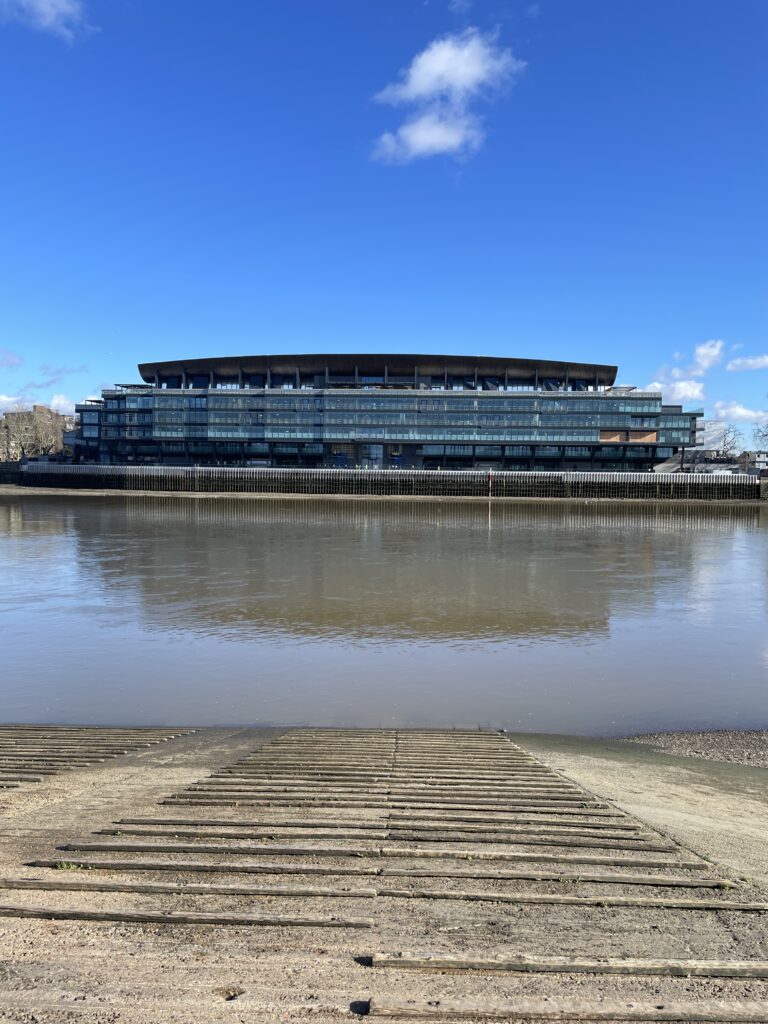
Craven Cottage
Craven Cottage is the home of the Fulham Football Club. The photos in this book show the stadium as it was before and during an extensive redevelopment that started in 2019.
While in other cities the stadiums are in the agglomeration, I was always impressed how in London many stadiums are in the middle of residential areas. Craven Cottage is one of those.
When I moved to London in 1994, I lived for a short while in Fulham. One evening coming home from work and seeing all the football supporters at Putney Bridge station, I went home to get out of my suit then followed the fans to the stadium and thus saw my first game in London. It was easy to get tickets, Fulham FC was in division 3 at the time.
Craven Cottage in 2024
Fulham Railway Bridge
The Fulham Railway Bridge does not seem to have an official name, some also call it the Putney Railway Bridge. Locally it is known as ‘The Iron Bridge’.
The bridge carries the District underground line (in this case overground). Unlike many other train bridges, its architect had a little bit of foresight and added a footbridge next to it.
Putney Bridge
The current Putney Bridge was build in 1886 and widened to its current shape in 1933. I love taking photos of this bridge, especially when it is lit up. There is a church on each end of the bridge, St Mary’s Church on the Putney side and the All Saints Church on the Fulham end. Only the All Saints Church can claim to be a movie star, having been featured in the horror movie ‘The Omen’. Having said that, it is at St Mary’s Church that the Putney Debatesstarted, an event that historically might just have the edge over a movie.
Putney Bridge is also where the ‘Boat Race’ starts, the rowing race between crews from the Oxford and Cambridge Universities. Since 1856 the race took place every year, except during the World Wars and during the Covid19 Pandemic.
Always a fun event to visit: Get a drink, pick a team, wait until the boats race by and go home. Find out in the news who won… and forget it instantly.
In Switzerland I created many labeled panoramas, in the UK only a few. My bestseller here is the one of Putney, which did not make it into the printed version of the book.
Panorama from Putney, installed in an office reception
Wandsworth Park
Wandsworth Park was bought in 1898 by London County Council, redesigned (it used to be allotment gardens), and opened in 1903 to the public. The design has remained largely unchanged. The park has a variety of over 40 different tree species, some line-up magnificently along the path by the Thames. You can also follow the Putney Sculpture Trail, there are tennis courts, crazy golf and my personal favourite… two Stink Pipes.
Stinkpipe in Wandsworth Park
The Hurlingham Club
Opposite Wandsworth Park you get a glimpse of the Hurlingham Club, a private members club. As per their website, it retains its quintessentially English traditions and heritage (Croquet and tea in short).
The Club is currently closed for new members (it’s a dead man shoes sort of situation).
Various Friends of mine are members and I was invited there on several occasions. But since polo is not played at the club anymore (the polo grounds were compulsory purchased by the Metropolitan Borough of Fulham after the war to build a council estate) I obviously have no interest in joining the waiting list.
The barges you see on the photo are two of four bird barges. They were put in place to compensate for the loss of bird habitat because of the River Side Quarter development. Fair is fair…
Wandsworth Bridge
The present bridge opened in 1940 and is one of the busiest road bridges in London. It has also been described as ‘probably the least noteworthy bridge in London’. The bridge was painted in a dull blue, to make it camouflaged against air-raids (maybe a small reminder to all of us that times are not as bad as they might seem?).
The Bridge is currently going through a revamp and LED lights will be installed under the arches to make it more of a feature at night.
Battersea Reach
I enjoy taking photos of Battersea Reach, a development, south of the river, next to Wandsworth Bridge.
Around sunset or sunrise, there is something serene about it, especially at high tide.
Battersea Railway Bridge
The Battersea Railway Bridge, also known as Chelsea River Bridge, opened in 1863 and leads from the south of the River towards the Chelsea Harbour and Imperial Wharf.
Initially, the Bridge was called Cremorne Bridge as it lead to the Cremorne Garden, a pleasure garden that spanned from the end of the King’s Road to Chelsea Harbour. Today only a vestige of the garden still exists by the Thames. Still popular with local residents it has lost its grandeur and does not deserve to have a bridge named after it anymore.
In 2013 the Diamond Jubilee Bridge, a foot and cycling bridge was approved. Once the funding is in place, this new bridge will be upstream, right next to the Battersea Railway Bridge (but as in 2024 this still hasn’t happen, I doubt it ever will…).
Battersea Bridge
The Battersea Bridge links Battersea to Chelsea. Some say that it is at this spot that Julius Cesar in 54BC crossed the Thames during the invasion of Britain.
In 1771 the Old Battersea Bridge (a modest timber bridge) was opened for pedestrians. It replaced a ferry service that ran from around 1550.
The current Battersea Bridge was opened in 1890 and is today the narrowest of all road bridges in London. Being build on a sharp bend in the Thames, it presents a hazard to navigation and has collided with boats on many occasions. The bridge was never at fault.
Albert Bridge
Albert Bridge is the favourite bridge of many Londoners. At night the bridge is illuminated with 4,000 LEDs and must be one of the most photographed structures in London. Named after Prince Albert, who was instrumental to get this bridge built, but had passed away by the time the bridge was opened without a formal ceremony in 1873.
The bridge was nicknamed ‘The trembling lady’, because of its tendency to vibrate, especially when used by the troops of the nearby Chelsea barracks. There are signs on both sides of the bridge asking troops to break step when crossing the bridge (the troops are gone, the signs are still there).
Despite being structurally not the soundest of bridges (lorries are prevented from crossing by a traffic island), it is now (bar Tower Bridge) the only central London traffic bridge to never have been replaced.
Battersea Power Station
The Battersea Power Station, a decommissioned coal-fire power station, famous (at least for me) to have been on Pink Floyd’s Animals album. I am still looking for the flying pig every time I pass. In its working days, it produced 1/5th of London’s electricity.
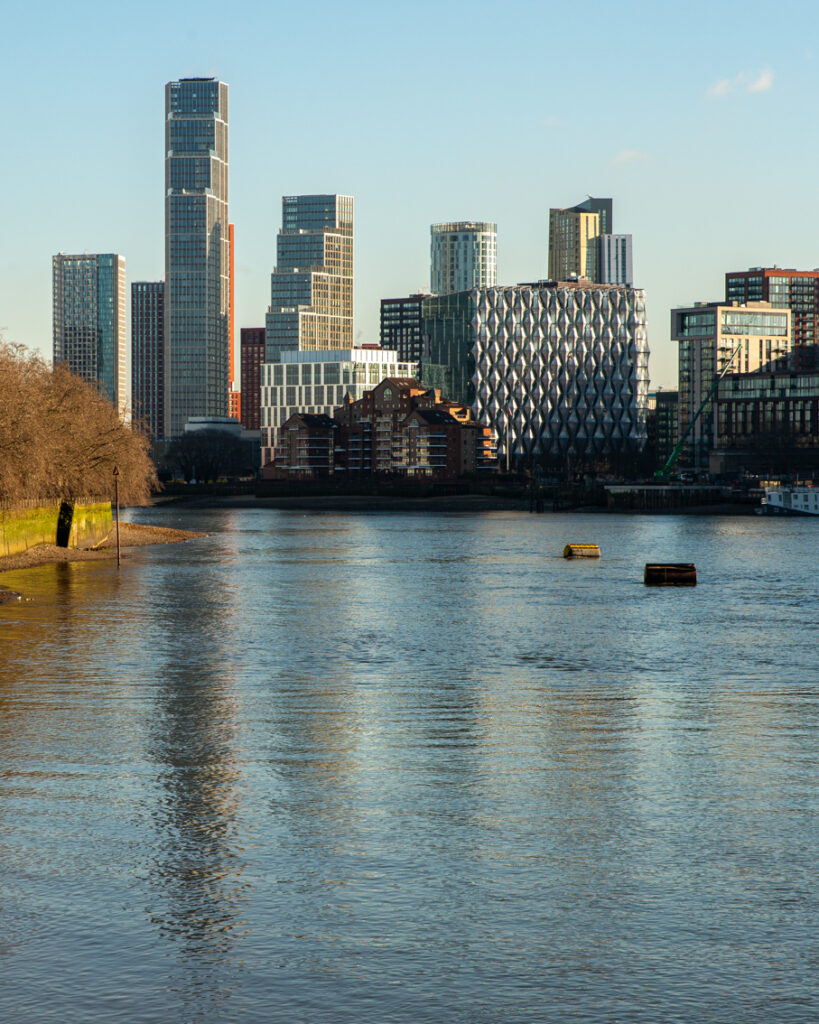
While for years free-standing in the middle of nowhere, Malaysian developers bought the building and the land around it in 2012. Since then this and all of Nine Elms has become one of the biggest redevelopment projects in London. Once completed, the building and its surrounding area will be a mixed-use neighbourhood, with restaurants, bars, shops, offices (e.g. Apple), and cultural spaces. (since I delivered the book, the Battersea Powerstationopened and is probably even better than I imagined it to be. Beautifully restored and for sure the only shopping centre in London without a charity shop in 2024).
The chimneys of the Power Station, similar to the London Eye, are illuminated in different colours depending on what is fashionable on a particular day.
In 2018 the US Embassy opened its offices in Nine Elms, adding another boost to the district.
US Embassy London
Grosvenor Bridge
The Grosvenor Railway Bridge (alternatively called the Victoria Railway Bridge) was originally constructed in 1860, but has since been widened and rebuilt a few times. It is located next to the Battersea Power Station.
Chelsea Bridge
The current Bridge was opened in 1937. It was the first self-anchored suspension bridge in Britain and built with materials entirely sourced within the British Empire (that was easier then than now I assume).
Not as flashy as Albert Bridge, but at night the bridge is illuminated with 285m of light-emitting diodes and looks stunning.
Vauxhall Bridge
The current Vauxhall Bridge opened in 1906. From the north side of the River, it leads neatly to the SIS Building (Secret Intelligence Service), aka MI6 Building. This is the headquarters of the secret service and also featured in various bond movies, famously in Skyfall, where it was blown up (they did use a 15 meter high model for this, not the real thing).
In real life, the building is actually pretty solid and only had a bit of superficial damage when in 2000 the RIRA (Real Irish Republican Army) shot an RPG-22 anti tack missile at it.
Queen Elizabeth II and her husband, the Duke of Edinburgh, opened the building in 1994, a clear sign of the importance, when both of them made an appearance.
Also on the south side of the river, but on the other side of the bridge, is the St George Wharf development. This mushroomed in the early 2000’s to its current shape. It includes the St George Wharf Tower, which was at one stage the highest residential building in London.
Lambeth Bridge
The dominant colour of Lambeth Bridge is red, the same colour as the leather benches in the House of Lords, which like the House of Commons is also in the Palace of Westminster, but nearer this bridge. The current Lambeth Bridge was opened by King George V.
On the south side of the bridge, you have the Lambeth Palace, which includes the Morton Tower and the Garden Museum that is housed in the former St Mary at Lambeth church.
A bit of London history from both sides of the bridge on this photo. Victoria Tower (north of Bridge), built in 1860, Morton Tower, 1490 and the St Mary at Lambeth, 1377.
Westminster Bridge
The current Westminster Bridge opened in 1862 and is the oldest road crossing over the Thames in Central London. It is painted green to reflect the colour of the leather seats in the House of Commons (which is located in the Palace of Westminster, on the north side of the bridge). Can you see the pattern?
Big Ben
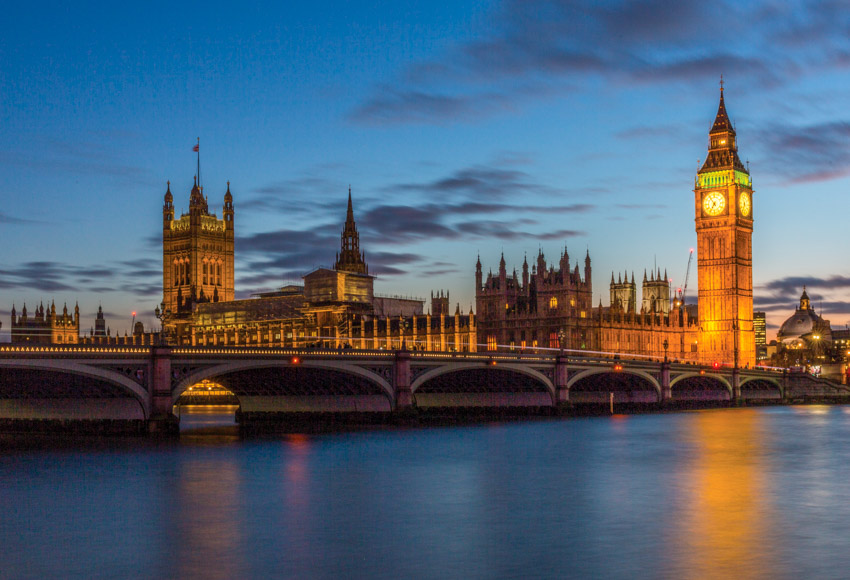
In 2012 the Clock Tower was renamed Elizabeth Tower to mark the Diamond Jubilee of Queen Elizabeth II. Seems pretty pointless to rename something after 150+ years (the Tower was completed in 1859). Big Ben is really just the nickname of the Great Bell inside the Tower, but try to tell that to us simple folks.
No visit to London is complete without having seen Big Ben and the Houses of Parliament. It is one of the symbols of the United Kingdom and parliamentary democracy (and that is probably why it has been hidden since 2017 behind scaffolding). – (I should have updated that as in 2024 the scaffolding has gone… but as you might be able to tell, I am not the biggest fan of the current crop of politicians).
Palace of Westminster
This is not the kind of book where I could give justice to the history and significance of the Palace of Westminster. We all know that it serves as the meeting place for the House of Commons and the House of Lords, the two houses of the parliament of the British Government.
It’s one of the most famous buildings in the world, magnificent from the outside but just as impressive on the inside (luckily politicians offer access for a small baksheesh, thus I had the opportunity to go to a few meetings as a guest by banks who try to impress their clients).
The building soon needs a major refurbishment which will take up to 6 years. During this time, the two houses will meet at different locations.
The London Eye
The London Eye is one of the UK’s most popular paid tourist attractions with over three million visitors annually.
You get some nice views and the flight (so-called because of its first sponsor, British Airways) is for some even a thrill (being Swiss and used to telecabines, I, unfortunately, lacked that excitement). Talking of sponsors… the current one is Lastminute.com. They signed the contract in November 2019 to take the responsibility from February 2020, only weeks before the first lockdown when they had to shut it down. Not ideal for them, but a perfect opportunity for us photographers to take long exposure photos without the wheel getting all blurry. A thank you from me to them for leaving the lights on!
The Eye opened in 2000 (it’s also called the Millennium Wheel) and initially was only supposed to last for 5 years. Due to its popularity, it’s unlikely going to disappear for a while.
I can live with that, with its ever-changing lights (depending on the occasion one has to celebrate or commiserate or the sponsor behind it) it makes for some nice photos.
Hungerford and Golden Jubilee Bridges
The Hungerford Bridge is a Railway Bridge between Waterloo Station and Charing Cross Station. It was built in 1864.
Since 2002 the bridge is flanked on both sides with the Golden Jubilee Bridges, two very photogenic footbridges.
Together with the One Embankment Place building, the bridges offer a great photo opportunity from the South Bank.
Once the seemingly never ending restoration of Big Ben is finished, the view from Waterloo Bridge towards the Hungerford Bridge, with the Royal Festival Hall and the London Eye on the left and the Palace of Westminster on the right is probably my favourite in London.
Waterloo Bridge
The current Waterloo Bridge is named after the Battle of Waterloo, to commemorate that famous victory against Napoleon. The bridge was built largely during World War II, and as if the challenges of building a bridge during this war were not big enough, the bridge was also the only one in London that took a hit in 1941 during the Blitz. It was officially opened in 1942 and completed in 1945. The bridge was also known as the Ladies Bridge, as because of the shortage of men during the war, many women were involved in the construction work.
The bridge has an unique location at the top of a bend in the Thames, and thus offers fantastic views in both directions, downriver towards the City and upriver towards the London Eye and the Big Ben. If you sometimes wonder why you like being in London, walking over that bridge gives you a sweet reminder!
Blackfriars Railway Bridge
The current Blackfriars Railway Bridge is the second bridge with that name. Of the first one, all you can see now are the pillars in between the Blackfriars Bridge and the new Blackfriars Railway Bridge.
The current bridge first opened in 1886, but has since then had extensive upgrades. It has now platform stations across the river (the only such bridge in London) and includes the installation of a roof covered with photovoltaic solar panels. It is today the largest of only three solar bridges in the world.
Blackfriars Bridge
The bridge was opened by Queen Victoria in 1869 and widened to its current size between 1907 and 1910.
It features stone carvings of seabirds on one side of the bridge (towards the Thames Estuary) and on the upstream side freshwater birds to reflect the tidal turning point of Blackfriars.
Another interesting feature are the pulpits at the top and on both sides of every bridge pier. They are a reference to the Black Friars that used to roam in that area until Henry VIII wanted to get divorced (and subsequently dissolved the monasteries). I assume there was never a sermon delivered from these pulpits.
The Millennium Bridge
The Millennium Bridge (officially ‘London Millennium Footbridge’) will always have a soft spot in my heart. Of course, it will forever be known as the Wobbly Bridge. It was another of these grand projects politicians love… but when it opened (delayed) in June 2000, it did not quite last another Millennium, but only 2 days before it was closed for two years to sort out the vibrations.
That said, I love the bridge and it looks stylish and elegant between the St Paul’s Cathedral and the Tate Modern.
St Paul’s Cathedral
St Paul’s Cathedral is a beautiful working church.
Up until 1963 it was the highest building in London (111m). The church can be visited for a fee and I highly recommend it even just for the view you get from the viewing platform of the dome. The stairway to the top is for many a challenge in itself (think narrow and steep) and once at the top, you get a unique view of the City of London. And you can say you have been in church… that must count when it comes to the final settlement.
St Paul’s Cathedral is located fairly close to where my office was when I was still working in the City. Close enough, for our then head trader (a Japanese Buddhist) to occasionally go there to pray when he took a big position. To quote Jake Blues, the Lord works in mysterious ways…
Tate Modern
Tate Modern is Britain’s national gallery of international modern art. Based in the former Bankside Power Station, it was redesigned by the Swiss architects Herzog and De Meuron.
They also designed the Switch House, constructed subsequently behind the main building. In 2017 the Switch House was renamed Blavatnik Building after the philanthropist billionaire who paid a substantial sum for the renovations (the name changed coincided with him getting a knighthood).
The Switch House has a balcony on the top floor that offers great free views of the London. The Shard, Canary Wharf, the City, St Pauls Cathedral and the London Eye and everything in between.
My favourite part of Tate Modern is the Turbine Hall. Every now and then they give an artist free rein to redesign the Hall. It is always worth having a quick look around.
Southwark Bridge
The Southwark Bridge’s claim to fame is that it has the least traffic of any of the Thames road bridges in London.
It is a personal favourite of mine at night time as it looks fabulous when lit up. With either the City, St Paul’s Cathedral, or the Shard in the background, I have tried to capture the view on many occasions.
The tidal Thames offers many different ways to take photos. At high tide, I usually go for reflections on the river, but low tide allows me to go to the ‘beach’ and take photos from a different perspective.
It’s also a great way to get away from the crowds, I only have to share this turf with metal detectorists and the new kids on the block… the mudlarkers. Friends of mine went mudlarkingrecently and showed me their trophies. Hard to say if the shard of earthenware they found was indeed Roman as they believe or from Ikea (my humble opinion), but it does not matter. They had a great time.
Cannon Street Railway Bridge
If you are looking for Cannons linked to the Cannon Street Railway Bridge you might be looking for a while.
It got its name from the Cannon Street Station to which it links, the Station got the name from Cannon Street. And Cannon Street I hear you ask? Was originally called Candlewrichstrete (due to the Candlemakers located on the street, which was then shortened many times as a result to the Cockney dialect and called Cannon Street since the 17th century. We all have to agree, that Cannon Street sounds cooler than Candle Street.
The bridge was originally built in the late 19th century and renovated to how it is now between 1979 and 1982. What remains from the original bridge are the twin brick towers by Cannon Street Station. These have been listed as Grade II in 1972. In the times of steam trains, the towers were not just ornamental, but they held large water tanks that were used to replenish steam locomotives and to power the station’s hydraulic system.
The bridge is part of the ‘Illuminated River’ project and (I quote) the subtle kinetic colours mirror the trains passing above.
London Bridge
This was the location of the first known river crossing. It goes back a bit… to 50AD (what have the Romans ever done for us?)
The current London Bridge is the latest of several bridges that have borne this name.
The previous one (named New London Bridge) seemed pretty nondescript and stood from 1831-1967. It was then sold to the American entrepreneur Robert P. McCulloch, who had the bridge rebuilt at Lake Havasu City, Arizona. It is now the second biggest tourist attraction in Arizona after the Grand Canyon. Hurray…
The really interesting bridge was the ‘Old London Bridge’, which stood from 1209-1831. It had a unique design with buildings on top of the bridge, some up to 7 stories high. It had a draw bridge in the middle for the boats to pass. Drawings show the bridge had 19 arches and many of the buildings had overhanging latrines thus you could do your business straight into the Thames. Boats probably did not hang around too long under the bridge…
The current London Bridge is fairly plain, but looks cool when lit up.
The City
The City of London, commonly known as the City or the Square Mile, is the one of the largest financial districts in the world. It hosts the Bank of England, many other banks, it is the centre for the Insurance Business (the famous Lloyds building now dwarfed by the towers around it) and of course a quarrel of lawyers.
In 1994, when I started to work in the City, the Natwest Tower (renamed later to Tower 42) was the tallest building, now it’s just one of many. In order of appearance, since then were built the Gherkin, the Broadgate Tower, the Heron Tower, the Walkie Talkie, The Cheese Grater, the Scalpel and Twenty Two (currently the tallest building in the City standing at 278 meters). And no, these are not always the official names…
It is basically the birthplace of London, but of course London, as we know it now, slightly outgrew the City.
Interestingly, the City of London is not a London borough. It is a separate ceremonial county, an enclave surrounded by Greater London and is the smallest county in the UK.
The Shard
Formerly known as the London Bridge Tower, the nickname took over and it became the Shard (as in shard of glass) fairly quickly.
At 309.6m height, it is currently (2021) the tallest building in the United Kingdom. It opened to the public in 2013 and is now a prominent feature in the landscape of London that can be seen from afar.
On the 72nd floor (at 244 meters) it has an open-air observation deck from which you get a great view in all directions. For the photographers among you, sadly no tripods allowed.
Like many buildings of value in London, the Shard is owned by the Qataris.
The Tower of London
The Tower of London is not a bad place to go for a history lesson. This book, however, is (but you knew that already).
With the first buildings going up in the 11th century, this fortress has seen it all.
Initially, it was used as a royal residence for many Kings and Queens, then it served variously as an armoury, a treasury, a menagerie, the home of the Royal Mint, a public record office, and the home of the Crown Jewels.
It was also used as a prison for centuries (up until 1952), the phrase ‘sent to the tower’ being a testimony to that.
Now the Tower of London is one of London’s biggest tourist attractions, a living museum with the Yeoman Warders (the Beefeaters) telling stories from the past and the guardians of the tower (ravens) hobbling around with their clipped wings.
Former City Hall
By the time this book is printed, this was the old headquarter of the Greater London Authority (GLA) which comprises the Mayor of London and the London Assembly.
Built in an area called ‘More London’, south of the river near Tower Bridge it is an interesting building with many nicknames. The former mayor of London Ken Livingstone referred to it as the glass testicle, Boris Johnson of course had to copy him but using a less common word and referred to it as glass gonad, but more commonly it is known as the snail or the onion.
I am not overly surprised that they decided to move to a more practical building and to a cheaper location. The move seems to save the GLA £126 million over 10 years.
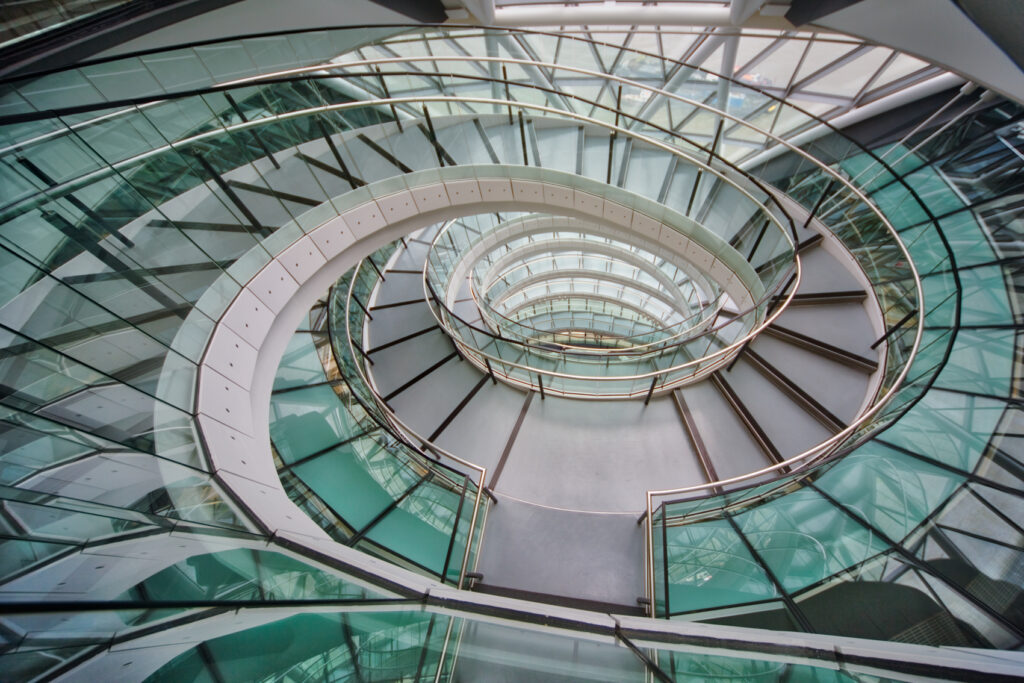
I included some photos taken from the inside. I once had the chance during an event called ‘Open London’ to take photos when the building was empty and I was mesmerised by the staircase that seems to take up most of the building.
The staircase of the former city hall in London
Tower Bridge
Without a doubt, one of the landmarks of London one has to see. Whether you are a tourist or you live in London, there is something about that bridge that captures your imagination. Have I taken a crazy amount of photos of this bridge? Undoubtedly.
In June 1894 the then Princess and Prince of Wales opened the bridge after an eight-year building period (their job description never seems to change). The bridge was designed to fit into the surroundings (for example the Tower of London) and thus made to look older than it was from the beginning.
The bridge consists of two bridge towers tied together at the upper level by two horizontal walkways, designed to withstand the horizontal tension forces imposed by the suspended sections of the bridge on the landward sides of the towers. The vertical components of the forces in the suspended sections and the vertical reactions of the two walkways are carried by the two robust towers. The bascule pivots and operating machinery are housed in the base of each tower.
These days you pay to visit the horizontal walkways as part of the Tower Bridge Experience, but initially they were free to use. Turns out they were mainly frequented by prostitutes and pocket thieves and thus they were closed for the public in 1910.
The Bridge still opens about twice a day (you can find the opening times on the Tower Bridge Website). Interesting fact is, that if you have a boat that is at least 9 meters tall and you want to sail under the bridge, all you have to do is to give a 24 hours warning and the bridge will open for you for free (river traffic has priority on this part of the Thames).
HMS Belfast
Launched on St Patrick’s Day 1938 the HMS Belfast saw action in the Second World War and in the Korean War. She was nearly scrapped in 1971 and survived only thanks to the formation of the private HMS Belfast Trust that fought for her preservation. The Government yielded, transferred the ship to the trust, she was moved to the current location between Tower Bridge and London Bridge on the south side of the Thames and opened to the public in 1971. Since 1978 she is a branch of the Imperial War Museum and is now a popular tourist destination.
The status of the army in British society will always be a bit of a mystery to me (having spent over 1.5 years in the Swiss Armed Forces, maybe I am just jealous), but I do have to admit, that the HMS Belfast is a cool looking warship (a town class light cruiser to be precise) and I like where it is and the contrast it gives to its surroundings.
The Blitz memorial
Designed by Wendy Taylor, this memorial commemorates the residents of the East End of London who lost their lives during the air raids of the Second World War. The dove sculpture has a contemporary look and the artist intended the work to be inspirational and represent hope as opposed to sorrow.
One of my side projects during the pandemic was to take photos for the Imperial War Museum Website for the memorials where they were missing photographic evidence.
Find more of my photos on theIWM Website and search for my name
St Katharine Docks
This former dock is now a mixed-used district in Central London, in the London Borough of Tower Hamlets, in a redevelopment zone known as the Docklands. The area features offices, public and private housing, a large hotel, shops and restaurants, a pub (The Dickens Inn, a former brewery dating back to the 18th century), a yachting marina and other recreational facilities. It is just next to Tower Bridge and worth a visit.
Canary Wharf / Isle of Dogs
In the 19th and early 20th century the Isle of Dogs was a big trading centre with many docks.
Towards the end of the 20th century Canary Wharf was built on this peninsula and soon became London’s second business district. Many large banks have their European headquarters there.
Canary Wharf belongs to Canary Wharf Group, of which the biggest shareholder is the Qatar Investment Authority (Canary Wharf is one of many investments by this fund in London). Canary Wharf is thus lovingly also known by the locals as ‘LonDoha’.
O2 Arena
Initially called the Millennium Dome it had a bit of a shaky start, especially after the ‘Millennium Experience’ in the year 2000 came to an end. The cost of maintaining the then empty building was estimated at £1 million pounds a month (this at a time when the pound still had some value) and the Dome became a political punching ball.
Luckily a solution was found, a few deals were made and in the end, O2 plc bought the naming rights.
Since then, the venue has hosted countless concerts (of which I was lucky to see a few), the Olympics, and many other events.
A great venue to visit using public transport (the thrill that public transport in the UK is always a gamble, adds to the experience).
Thames Barrier
The Thames Barrier spans 520 meters across the Thames and is one of the largest movable flood barriers in the world.
From where I live, the Thames Barrier is a bit of a journey, whether I end up south or north of the river. The Barrier is built about 3 km east of the Isle of Dogs (Canary Wharf) and protects London from being flooded by high tides and storm surges moving up from the North Sea since 1982. When needed, they close the barrier and at low tide it can be lowered to restore the river’s flow towards the sea.
Even considering climate change and subject to appropriate modification, the Environment Agency indicates that the Thames Barrier will provide continued protection against rising sea levels until at least 2070. Good news at my age, it will see me out.
Voilà – Thanks for reading and I hope you enjoy the photos of ‘London’s Riverside in Photographs’.
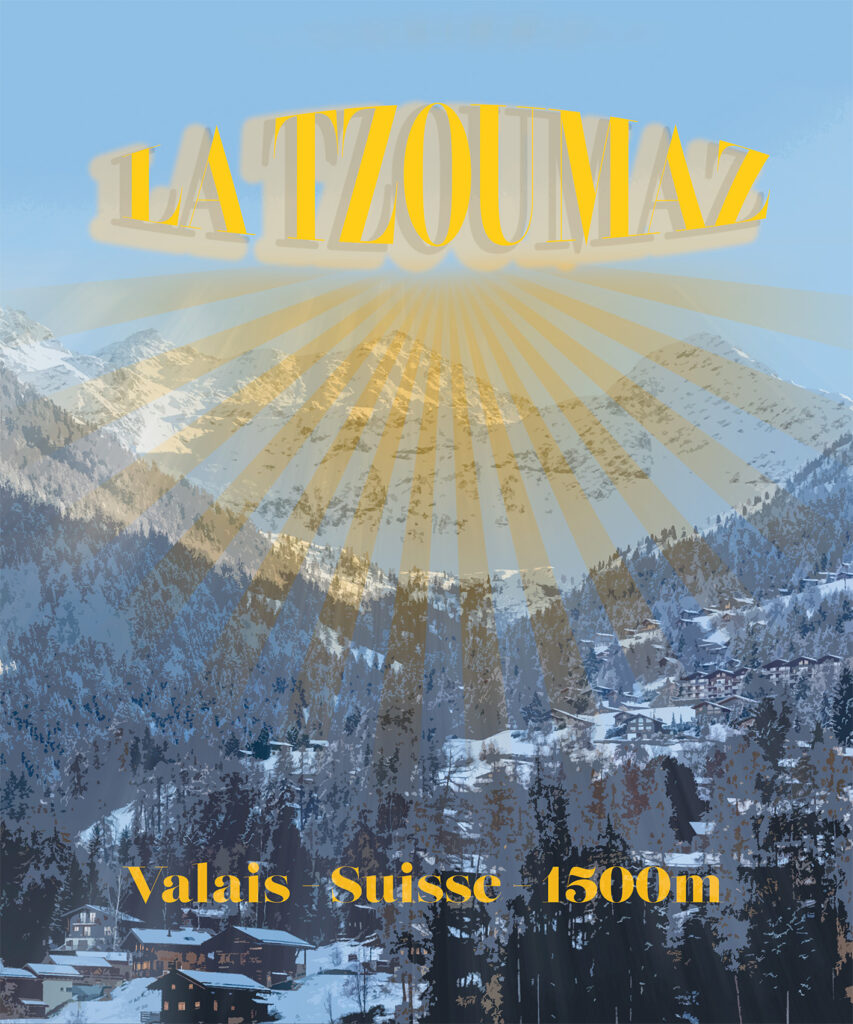
I am aware that the words ‘real faux’ vintage posters don’t roll easily off the tongue. But… that is what I decided to call my line of fake vintage posters. The difference to many vintage posters that you can buy from various resorts is that at least mine are correctly labeled.
On my website you find many more posters of La Tzoumaz, Verbier or London. Find the link below. Vintage Posters add that little extra to your home or holiday home. I have priced them as if inflation never existed. Potentially I can offer them framed, but with a format of 50cmx60cm you will have no problem finding your perfect frame.
Below the latest two I added to the selection. Check in regularly, I will most likely add more images in the future.
Real Faux Vintage Poster La Tzoumaz – Vallon d’ArbiReal Faux Vintage Poster L’Hiver à La Tzoumaz
See all the ‘real faux’ vintage posters in the following short clip featuring La Tzoumaz, Verbier and London. The London ones are not all meant to be serious. A couple of years ago I was taking photos of tube stations for booking.com and visited all corners of London. Some of the posters are from that time. Apologies if they might offend… I don’t live in the flashiest part of London either and I love it.
The latest line up of my ‘Real Faux’ Vintage Posters
They look great on your wall and are a great conversation starter. Some of the posters are currently on display at the Restaurant Les Trappeurs in La Tzoumaz.
The images are printed on poster paper (on demand I can print them on photo paper) and you can find all of them here or in my online shop.
If you prefer to pay in Swiss Francs, contact me and I can accept Twint or other forms of payment.
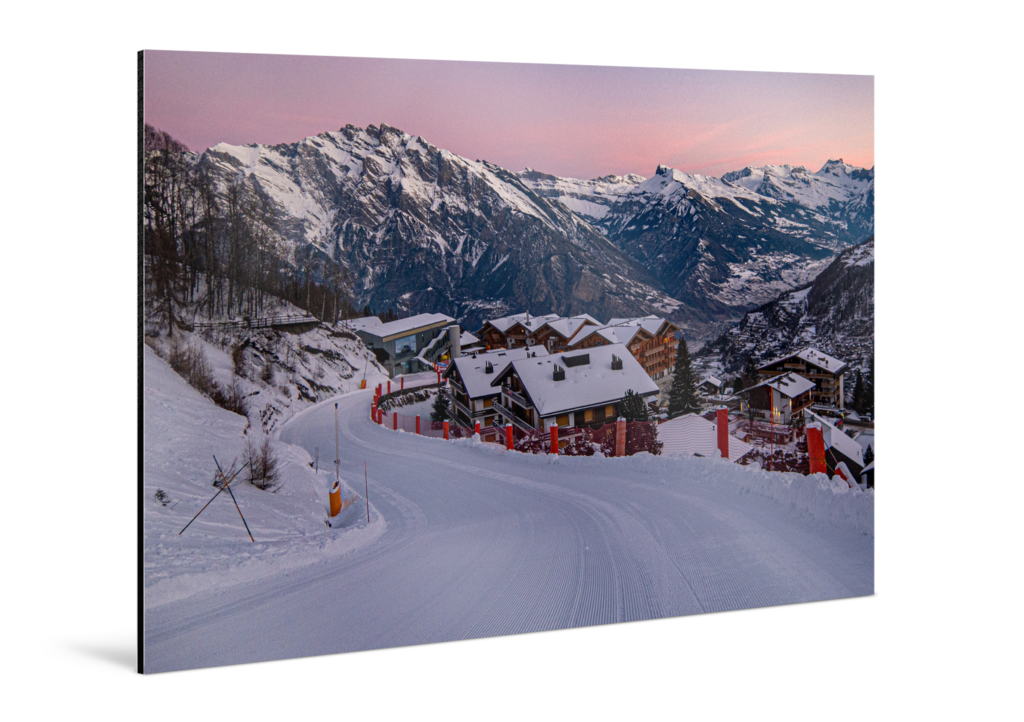
After having published my trilingual photo book ‘Mein Wallis – Mon Valais – My Valais’ I got contacted by several interested parties to ask if they could buy some of the photos as a print (for example as wall art to improve your home or secondary residence) and this year I sold more photos than labelled panoramas. Before getting too excited for me, panoramas seldom (never) sold like hotcakes. The photos are usually photos printed on either AluDibond, canvas, or occasionally printed on photo paper and framed.
Skiing into La Tzoumaz
The photos are a great idea for a big birthday, a Christmas gift that lasts forever and a feature that will not only improve your walls, but also most likely increase the value of your property. Believe me, in my role as a property photographer I have taken photos of many holiday homes that are either for sale or for rent, and rarely I am impressed with the things (I chose this word carefully) that are hanging on the walls.
Verbier under the fog
When I received my first large prints I was nervous. Will the photos look as good as on my computer? Will the colours be represented correctly? And most importantly, will the customers be happy with the result? The answer was yes on all accounts. I loved the photos and was nearly sad to part with them.
The Lac des Vaux at sunset
When customers are interested in buying a high quality print we usually discuss what they are looking for. e.g. mountains, trees, autumn, a specific place, what colour would match the intended space.
I then send a small selection of photos to the customers from which they can choose the one (or several) they like.
I have many photos from the alps (and maybe buying my book to give you some ideas would be a great start), but also from around London.
Lac de Derborence
As a side remark, some of my London photos will be published in a book in 2024 (I know, how exciting).
Tower Bridge with the Shard
Once you have chosen your photo, indicated your preferred size and on what material the artwork should be printed I will make you a price. Please get in touch by email through my contact page. Wall art for your home or secondary residence could of course also include my labelled panoramas. Check them out in my various galleries please.
It’s that time of the year again when I have to organise my summer. While my middle-class friends in London plan holidays in the Caribbean or glamping in Glastonbury, the pauper that I am is working the markets.
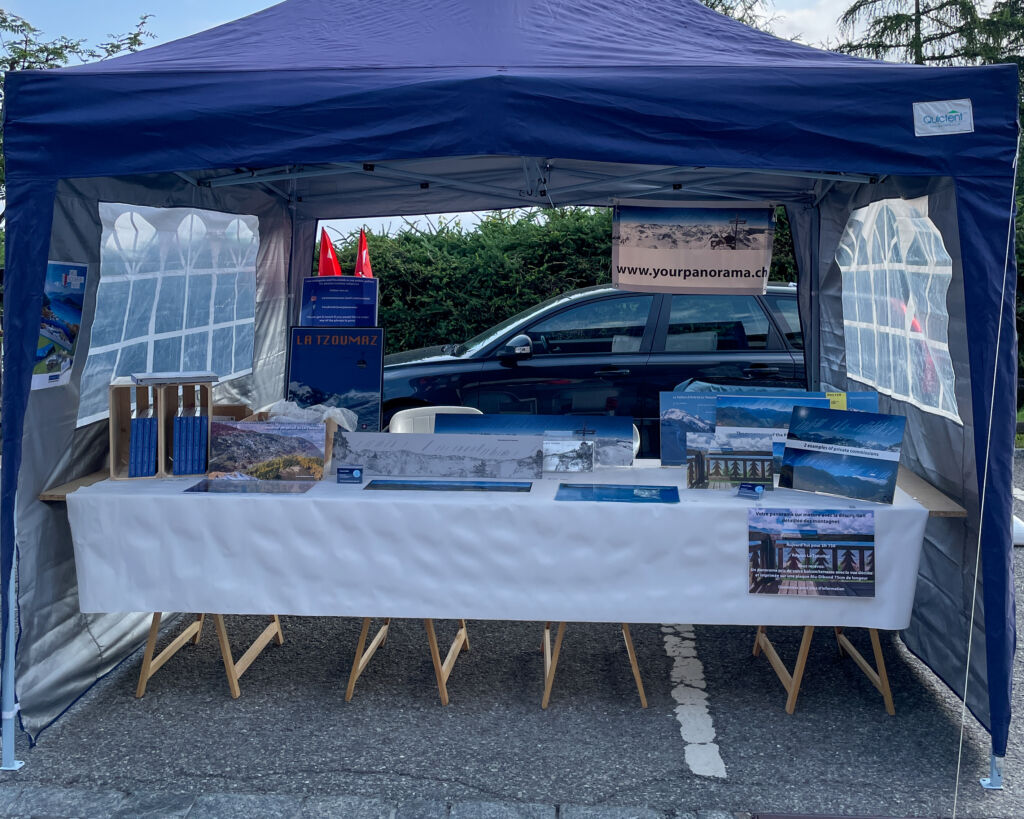
One of the regular events that I participate in is theannual ‘Arts and Crafts market’ in La Tzoumaz (10th of July 2022), a.k.a. the Coachella of the Alps. I will also be at the Kermesse in Verbier (31st of July/1st ofAugust 2022). I don’t expect you to cancel all your plans, but should you be in the area, you are most welcome to visit me and I will give you a free backstage pass (you can stand behind the stall while my assistant and I go and have a drink).
I already mentioned the assistant. Many of my friends dread that mail from me when I casually mention that they are most welcome to come to stay at my place in the mountains in July… only to follow it up with saying that I have a market stall and while they are there they are considered staff. Less and less fall into the trap, but this year I got one again (just joking… he loves it).
As you by now should know, my products of choice are personalised labeled panoramas (Do you need a gentle reminder of what I mean? See some examples here). While I have a few generic panoramas to sell, it’s not exactly a perfect product for a market stall. Hence… every year I go through the process of what else I could promote in order to keep us busy (that’s busy as in not falling asleep behind the stall).
So this year I will delight my fans with the following products:
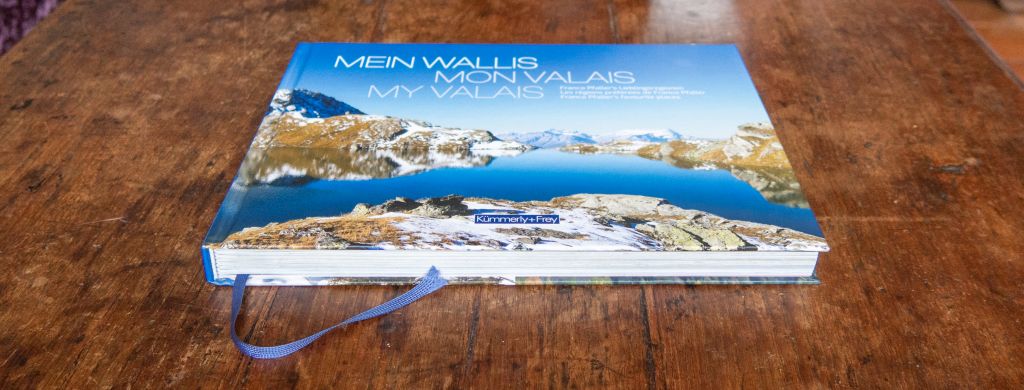
Obviously… my trilingual book ‘Mein Wallis – Mon Valais – My Valais’ that really should be in every chalet in Verbier and La Tzoumaz.
Dreisprachiges Fotobuch
The beautiful 2023 La Tzoumaz / Verbier calendar with 13 quality photos (or his sister the even more beautiful ‘perpetual’ calendar).
2023 Calendar of La Tzoumaz / Verbier
Paper tablemats that are both informative and decorative. Perfect for that romantic evening or the drunken fondue orgy.
And this year I will offer REAL faux vintage Posters of the nicest ski resort in the Alps and Verbier such as these two.
Both the markets are always fun events. The stalls that have a product to sell (such as mine) at best break even and food and drink stalls make a fortune (partially because of me). That’s life…
I am looking forward to seeing some of you and I wish you all a great summer!
Interested in photography (or know someone who is?) / visiting London? Read on… about my London Photo Tours.
I recently went on a hike with a friend who is a successful leadership advisor. We (mainly him) talked and talked and he came back with one of his pet subjects… he wants me to organise guided photo tours in Switzerland, specifically in the resort that is my second home, La Tzoumaz/Verbier. I am not quite prepared for that yet, but I have decided to offer guided tours closer to home. Et voilà – I will offer London Photo Tours.
All my London Photo Tours are bespoke to your interest and technical knowledge and we will discuss this in advance. I can offer the tours in English, German (even Swiss German) and French (my own version of…).
Who is it for? Well…
Do you only have a short time in London and want to capture some of the iconic views?
Maybe you are on a business trip and instead of walking around aimlessly (I have been there), want to do something interesting in your downtime?
Maybe you just want to have some company while exploring London with your camera?
Are you learning photography and would like some tips from a published photographer (who, I might add… is working on photo book about London to be published in 2024)?
Or is your partner interested in photography and you would like to go shopping? I can babysit him/her for you. Offer the session as a gift.
Are you a business that has visitors from abroad and you want to offer them something different?
Questions I will ask before organising the bespoke trip:
Are you only interested in shots for your social media accounts?
Are you into street photography?
Are you interested in night photography?
Long exposure photography?
What equipment do you have? Camera, tripod, Smartphone?
Would you like to get some tips on how to take cityscapes?
And… what would you like to get out of it?
I will then tailor a three-hour tour and we hopefully spend an interesting/educational/fun time together.
By the way, I am aware that I am not inventing the wheel. Others offer photo tours too. But what I am offering is a very personalised experience (mainly because this makes it more interesting for me too). I also believe, that having lived in London since 1994, and having worked for 17 years with a stockbroker in the City of London, I might just have the odd story to tell that makes the visit a bit more interesting.
Needless to say, we will not see everything that London has to offer. Hence I would be happy to sit down in a coffee/pub (depending on the time of the day) after the tour, discuss the session, go through some of the photos, and give you some ideas of what else you should do during your visit.